
Introduction
Every business needs a professional online presence, but choosing the right technology to build a website can be confusing. When you start exploring website development options, two approaches you’ll commonly come across are WordPress website development and custom website development. Both can help businesses establish their online presence, showcase services, attract customers and generate enquiries. However, they work differently, and choosing the wrong approach can create unnecessary expenses or technical limitations as your business grows.
So, which option is better for your business in 2027? Should you choose WordPress because it is flexible and relatively easy to manage, or invest in custom website development for greater control over functionality and design? The answer depends on your business requirements, budget, technical needs and long-term plans. In this blog, we’ll compare WordPress and custom website development, explore their advantages and limitations, and help you understand which solution makes more sense for your business.
What Is WordPress Website Development?
WordPress is a popular Content Management System (CMS) that allows users to create and manage websites without building every component from scratch. It provides a foundation for website development through themes, plugins, templates and customisation options. Businesses can use WordPress to create company websites, blogs, portfolios, service websites, educational platforms and online stores. Its flexible structure makes it suitable for a wide range of website requirements, from simple business websites to more advanced digital platforms.
One of the biggest advantages of WordPress is its content management system. Website owners can publish blogs, update service information, upload photographs and manage many website elements through an administrative dashboard. Developers can also customise themes, write additional code and integrate different plugins to create more specific functionality. This makes WordPress a practical option for businesses that want a professional website while retaining the ability to manage regular content updates without depending on a developer for every small change.
What Is Custom Website Development?
Custom website development involves creating a website specifically according to a business’s requirements using programming languages, frameworks and other development technologies. Instead of depending primarily on an existing CMS theme or ready-made structure, developers build the website architecture, design and functionality according to the project’s needs. This approach can provide greater control over the website’s behaviour, appearance and technical structure, particularly when a business requires features that standard website platforms may not easily support.
Custom development is often useful for businesses that need specialised functionality, complex integrations, advanced user permissions or unique digital experiences. For example, a company developing an online booking platform, customer management system or specialised business application may require functionality beyond a conventional company website. However, custom development also requires more planning, technical expertise, testing and ongoing maintenance. Its suitability depends on whether the business genuinely needs a custom-built solution or can achieve its objectives through an existing platform.
WordPress vs Custom Website Development: Understanding the Difference
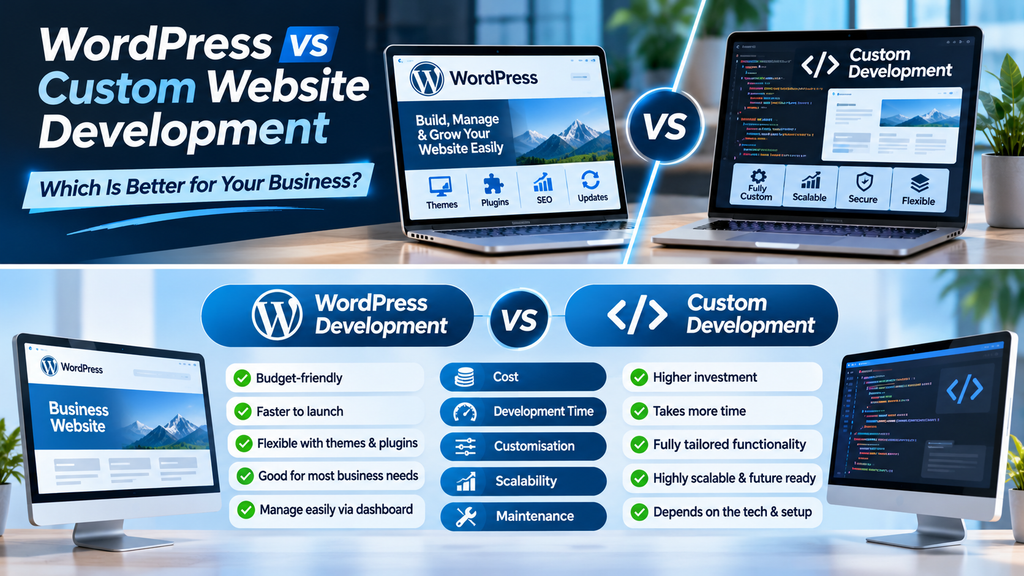
The main difference between WordPress and custom website development is how the website is created and managed. WordPress provides an existing platform with a large ecosystem of themes, plugins and development tools, whereas custom development involves building functionality according to specific project requirements. WordPress can reduce development time for many common website requirements, while custom development provides more freedom to design the underlying architecture and features.
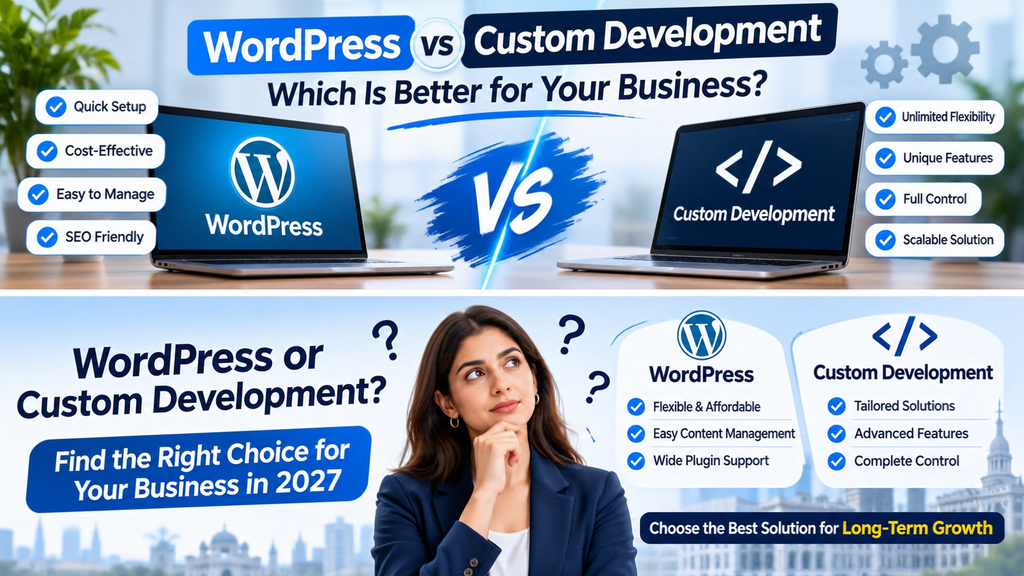
However, neither approach is automatically better for every business. A small company that needs a professional website with service pages, contact forms and a blog may find WordPress more practical. A technology company building a complex online platform with specialised workflows may benefit from custom development. The decision should be based on the website’s actual purpose, expected traffic, required features, available budget and future maintenance needs.
| Comparison | WordPress Website Development | Custom Website Development |
| Development approach | Uses an existing CMS platform | Built according to project requirements |
| Initial cost | Often more budget-friendly | Generally requires a larger investment |
| Development time | Usually faster for standard websites | Can take longer depending on complexity |
| Customisation | Themes, plugins and custom code | Extensive control over the implementation |
| Content management | Built-in administration dashboard | Depends on the CMS or management system developed |
| Maintenance | Requires updates to core, themes and plugins | Depends on the technology and architecture |
| SEO | Supports SEO plugins and custom optimisation | SEO depends on implementation and configuration |
| Scalability | Can support many growing business requirements | Can be designed around specialised scaling needs |
| Technical knowledge | Basic content management is relatively accessible | Development and maintenance often require technical expertise |
| Best suited for | Business websites, blogs and many online stores | Complex platforms and specialised applications |
The comparison shows that WordPress is often a practical choice for standard business website requirements, while custom development can be more suitable when specialised functionality is essential. However, actual costs, performance and flexibility depend on how the website is designed and developed. A poorly developed custom website can perform worse than a professionally optimised WordPress website, so technology alone should never be treated as a guarantee of quality.
Which Is More Affordable: WordPress or Custom Website Development?
Budget is one of the first things businesses consider when planning a new website. WordPress can be a cost-effective option because many basic website features are already available through its platform, themes and plugins. Developers can use existing tools to create pages, contact forms, blogs and other common features without writing every component from scratch. This can reduce development time and make WordPress suitable for startups, local businesses and companies that want to establish an online presence without investing heavily in a fully custom-built platform.
Custom website development generally involves more planning, design work, programming and testing, which can increase the initial investment. However, cost should not be evaluated only by looking at the first development invoice. Businesses should also consider hosting, maintenance, security, future upgrades, plugin or software licences and the cost of adding new features. The right choice is the one that provides the functionality your business needs without creating unnecessary development or maintenance expenses.
Which Option Is Better for Website Design and Customisation?
Website design plays an important role in how customers perceive your business. Your website should reflect your brand identity, communicate your services clearly and provide a smooth browsing experience. WordPress offers a wide range of design possibilities through themes, page builders and custom development. Businesses can create professional layouts, service pages, landing pages, galleries and responsive designs. With the right developer, WordPress websites can be customised extensively rather than being limited to basic ready-made templates.
Custom website development provides greater control over the design and underlying implementation because developers can build specific layouts and interactions according to project requirements. This can be useful when a brand requires a distinctive digital experience or specialised interface elements. However, more customisation also means more development and testing. For most business websites, a professionally designed and customised WordPress website can provide an excellent balance between visual quality, functionality and cost.
Which Is Better for SEO and Google Rankings?
Search engine optimisation is an important consideration when choosing a website development platform. Your website needs a clear structure, relevant content, fast loading pages, mobile-friendly layouts and properly configured technical elements to support search visibility. WordPress provides several tools and plugins that can help manage SEO titles, meta descriptions, XML sitemaps, canonical tags and other optimisation requirements. It also makes publishing blogs and updating website content relatively convenient, which is useful for businesses investing in ongoing SEO.
Custom websites can also perform well in search engines when they are developed with SEO requirements in mind. Developers have control over URL structures, page architecture, metadata, structured data, loading performance and other technical elements. However, these features need to be implemented correctly. Neither WordPress nor custom development automatically guarantees first-page Google rankings. Search performance depends on content quality, keyword relevance, website experience, technical optimisation, competition and several other factors.
Website Speed and Performance: Which Is Better?
Website speed influences the experience visitors have when they open your pages. A slow website can frustrate users, increase abandonment and make it harder for visitors to explore your services. WordPress performance depends on several factors, including hosting quality, theme selection, plugin usage, image optimisation, caching and the way the website is developed. A lightweight theme, carefully selected plugins and proper performance optimisation can help create a fast WordPress website.
Custom websites can also be built for specific performance requirements, but they are not automatically faster. Poorly written code, inefficient database queries and unnecessary scripts can affect their speed just as easily as excessive plugins can affect a WordPress website. The important thing is to use appropriate development practices, optimise images, reduce unnecessary scripts and test performance regularly. Tools such as Google PageSpeed Insights can help identify loading and user experience improvements for both types of websites.
Which Website Is Easier to Manage and Update?
A website isn’t something you create once and forget about. Businesses regularly need to update service information, publish blogs, change photographs, announce offers and modify contact details. WordPress is particularly convenient for these activities because its administrative dashboard provides tools for managing pages, posts, media and other website content. Once the website has been configured properly, business owners or their teams can often make routine content changes without writing code.
Custom websites can also include content management systems, but their ease of use depends on how the developer has designed the administration system. Some custom platforms provide simple dashboards, while others require technical assistance for even basic updates. Before choosing custom development, businesses should clarify how content will be managed and whether training or documentation will be provided. A good website should not only look professional but also be practical to maintain after the development project is completed.
Security and Website Maintenance: What Should You Know?
Website security is important regardless of which technology you choose. WordPress websites need regular updates to the WordPress core, themes and plugins. Businesses should use trusted extensions, secure hosting, strong administrator passwords, backups and appropriate security measures. Outdated software and poorly maintained plugins can introduce vulnerabilities, so regular maintenance should be part of the website management process rather than something considered only after a problem occurs.
Custom websites also require ongoing security attention. Developers need to maintain the codebase, update dependencies, review access controls and monitor potential vulnerabilities. A custom platform may provide more control over how security features are implemented, but it also places greater responsibility on the development and maintenance team. There is no website technology that is completely free from security risks. Proper maintenance, regular backups and timely updates are important for every business website.
Is WordPress Suitable for Small Businesses and Startups?
For many small businesses and startups, WordPress is an excellent starting point. A new company may need a homepage, about page, service pages, contact forms, a blog and basic enquiry functionality. WordPress can provide these features through its existing ecosystem, reducing the amount of development required. It also allows businesses to expand their content and introduce additional features as their requirements change, making it a practical option for companies that want to build their online presence gradually.
Startups should also consider their long-term plans before selecting a platform. If the business expects to launch a complex digital product, specialised membership system or advanced application, custom development may eventually become more suitable. However, investing in complicated technology before understanding the actual business requirements can create unnecessary costs. A sensible approach is to select a solution that meets current needs while allowing reasonable room for future growth.
When Should You Choose Custom Website Development?
Custom website development becomes more valuable when a project requires functionality that cannot be implemented efficiently through standard website tools. For example, a company may need a specialised booking system, complex product configuration, advanced customer dashboard or integration with internal business software. These requirements may involve unique workflows, data structures and user permissions that need a more tailored development approach. In such cases, custom development can provide the flexibility needed to build the required experience.
Businesses should also evaluate whether the proposed custom features genuinely justify the additional investment. Sometimes, a customised WordPress solution or another established platform may already provide the necessary functionality. Before choosing custom development, prepare a clear list of requirements, expected users, integrations, performance needs and future expansion plans. A professional developer can then assess the most appropriate technology rather than recommending a custom solution simply because it involves more development work.
Common Mistakes Businesses Make When Choosing Website Development
One common mistake is selecting a website platform only because it is popular or inexpensive. Every business has different requirements, and the technology should support those needs rather than create limitations. Some companies spend too much on custom features they never use, while others select cheap templates that do not support their design or functionality requirements. Businesses should first identify the website’s purpose, expected visitors and essential features before making a final decision.
Another mistake is focusing entirely on appearance while ignoring SEO, website speed, mobile responsiveness, security and content management. A visually attractive website may still struggle to generate enquiries if its navigation is confusing or visitors cannot find important information. Before starting development, make sure your project includes a clear sitemap, content plan, contact strategy, technical requirements and maintenance arrangements. Choosing the right development partner is just as important as selecting the right platform.
How to Choose the Right Website Development Company
Choosing a website development company requires more than comparing quotations. Review the company’s previous projects, design quality, technical experience and understanding of your industry. Ask whether it offers WordPress development, custom website development, responsive design, SEO-friendly development and ongoing maintenance. A professional development team should be able to understand your business objectives and explain which technology is appropriate for your requirements rather than pushing a single solution for every project.
You should also clarify the project scope before development begins. Discuss the number of pages, design requirements, functionality, content responsibilities, hosting, domain ownership, security, backups and future support. Make sure you understand what is included in the quoted price and whether additional features will involve extra charges. A well-planned website development project should provide clarity about responsibilities, delivery expectations and ongoing management.
Frequently Asked Questions About WordPress vs Custom Website Development
Is WordPress better than custom website development?
WordPress is often better for standard business websites, blogs and many online stores because it offers flexibility, convenient content management and a wide range of existing tools. Custom development may be better for complex platforms with specialised functionality.
Is custom website development more expensive than WordPress?
Custom development generally requires a higher initial investment because it involves more design, programming and testing. However, the final cost depends on the project’s complexity, features, technology and maintenance requirements.
Can a WordPress website rank on Google?
Yes. A properly developed and optimised WordPress website can rank on Google. Search rankings depend on content quality, technical SEO, keyword relevance, user experience and competition rather than the CMS alone.
Is WordPress suitable for business websites?
Yes. WordPress is suitable for many business websites, including company websites, service websites, portfolios, blogs and e-commerce stores. It can also be customised to support specific business requirements.
Which website is faster, WordPress or custom development?
Neither is automatically faster. Website performance depends on hosting, code quality, themes, plugins, scripts, images and optimisation. Both approaches can deliver good performance when developed properly.
Can I update a WordPress website myself?
Yes. WordPress provides an administrative dashboard that allows users to update.